At The Great Projects, we often say that no two rescue stories are ever the same, and this week, we were reminded exactly why.
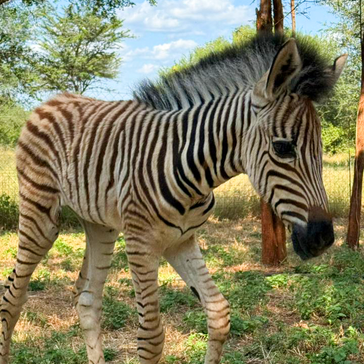
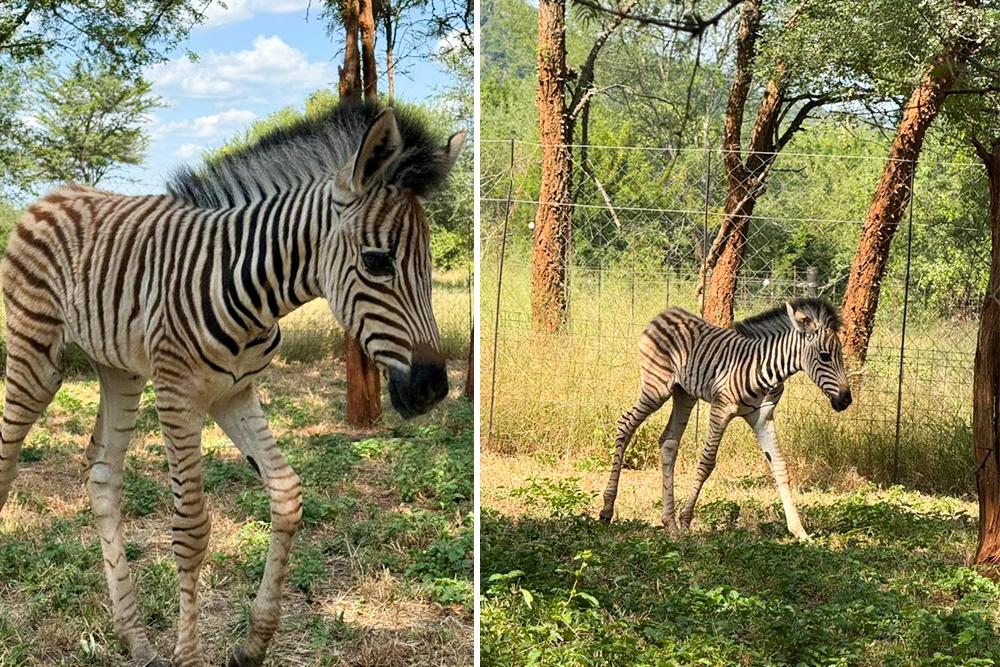
Early one morning, the rangers at SanWild Sanctuary & Reserve made a heartbreaking discovery: a young zebra stallion standing alone by the roadside, abandoned and shaken. They immediately scanned the surrounding area, hoping his mother or herd might still be nearby, but there was no sign of either.
A closer look revealed small wounds on the inside of his legs, likely caused by kicks. In the wild, dominant stallions often drive young males out of the herd and, in some cases, kill them to eliminate future competition. It’s a brutal but natural reality of life on the plains, and sadly, it appeared this foal had already begun to experience it.
After waiting and watching, it became clear his mother wasn’t coming back. With visible injuries and no protection from a herd, the team made the decision to bring him into the rehabilitation centre, where he could receive treatment, warmth, and proper nutrition. They’ve since named him Kumba.
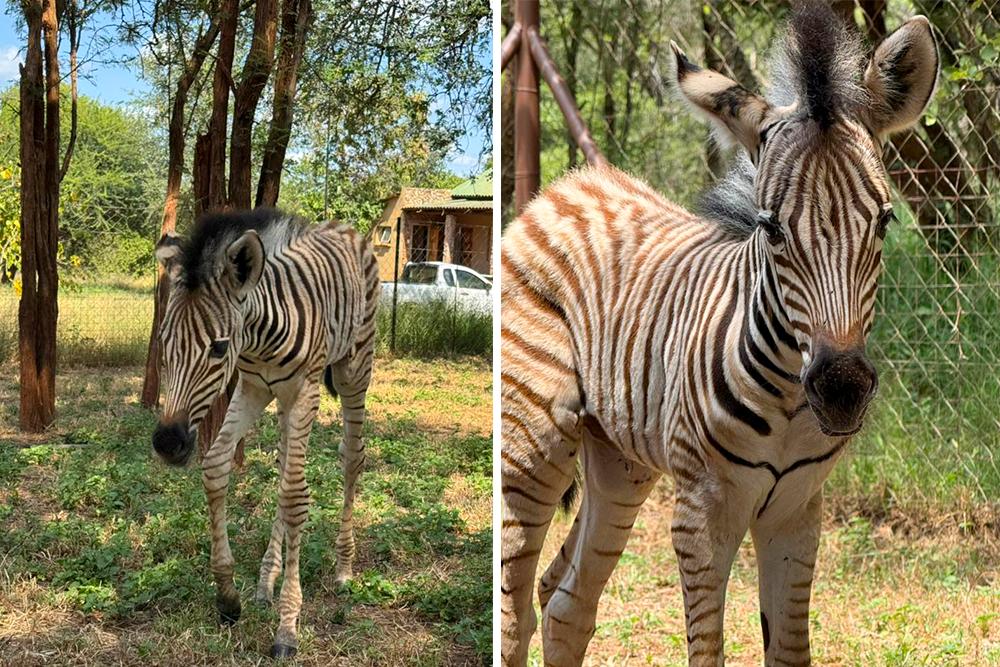
Kumba has started drinking milk reliably and is doing really well. For a young zebra in such a vulnerable situation, this is a major milestone.
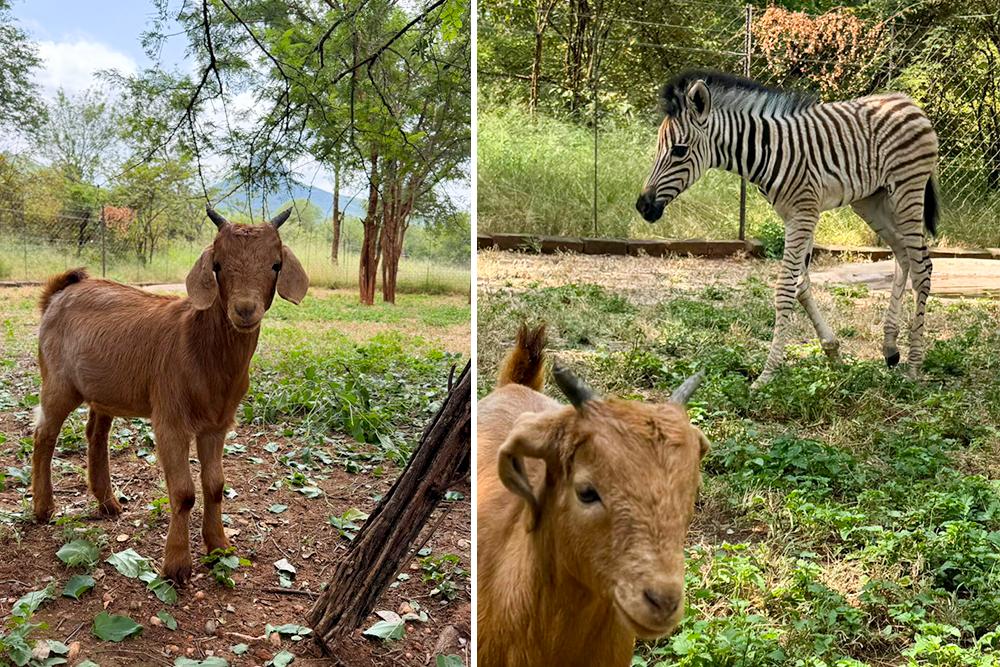
In true sanctuary fashion, he hasn’t been alone. He’s already formed a unique friendship with Bakkies, the resident goat who has a remarkable survival story of his own. Last year, while rangers were offloading meat, they noticed one of the “carcasses” move. Acting quickly, they rushed the tiny goat’s aid. Against the odds, he survived, and since then, Bakkies has become part of the family.
While Bakkies is also still young, his presence has been incredibly important. Kumba is bonding with another animal rather than following people, which is absolutely critical. Rescuing Kumba was the first step, but rehabilitation is the true goal.
Now that Kumba is stable and feeding well, the next phase of his journey begins: preventing human imprinting, while he is currently taking milk. The team will be looking to introduce a surrogate sheep so that Kumba forms a natural attachment to another animal rather than to humans. This step is particularly important because Kumba is a stallion.
With zebras, it’s not the same for males and females when it comes to rehabilitation. As stallions mature and go through hormonal changes, they naturally begin to assert dominance. Young stallions cannot simply be released back into the wild at any stage. If a juvenile male tries to join an established herd, the dominant stallion will likely attack him and may even kill him, as Kumba has likely experienced. It’s how zebra social structures work. That means Kumba cannot be released until he is fully mature and capable of fending for himself.
So for now, the focus is clear:
- Get him off the bottle in time
- Avoid human imprinting
- Ensure he bonds with the right companion
- Raise him to adulthood safely
As Didi, Director of SanWild Sanctuary & Reserve, explains:
“People don’t always realise that saving a wild animal comes with enormous responsibility. Rescue is only the first step; you can’t simply release it without thinking about the consequences. If an animal becomes human-imprinted, you may have made it impossible for that animal to ever return to the wild.”
It’s a delicate balance between care and wildness; stepping in just enough to save a life, but not so much that you take away its future. For now, Kumba is safe, healing, and drinking well, with a goat friend by his side. The team is carefully planning every next step to ensure his story doesn’t end in captivity, but in independence.
Sometimes conservation isn’t about dramatic rescues with helicopters sweeping landscapes, sometimes it’s quiet decisions made in the early hours of the morning. Sometimes it’s about knowing when to step in and when to step back.
For this little stallion, the journey is only just beginning.